Highlights of the Louvre Museum
Highlights of the Louvre Museum
As one of the largest museums in the world, the Louvre can be overwhelming to visit. Over 38,000 treasures are displayed in three wings of the enormous Louvre palace. Visiting this iconic glass museum in Paris is a dream for millions, with over 10 million visitors every year. It’s a bucket-list destination for art lovers and history buffs alike.
Inside, you’ll find treasures spanning centuries, from ancient civilizations to modern masterpieces. Explore famous works of art like the Mona Lisa and Napoleon paintings such as Napoleon Crossing the Alps, or marvel at breathtaking sculptures like the Venus de Milo. The Raft of the Medusa, a dramatic piece by French artist Géricault, is another must-see.
The museum’s collection of French paintings is unmatched, featuring works from masters like Delacroix and David. Art enthusiasts will also be fascinated by Leonard da Vinci sepia art, showcasing the Renaissance genius’s ability to create depth and warmth in monochromatic tones. Whether you're drawn to art masterpieces or lesser-known gems, there’s something to amaze everyone.
The museum’s collection of French paintings is unmatched, featuring works from masters like Delacroix and David. With us, you can discover the Louvre’s highlights and hidden corners. Whether you’re looking for the top ten things to see at the Louvre or want to explore its fascinating history, this museum in Paris promises an unforgettable journey into art and culture.

Mona Lisa
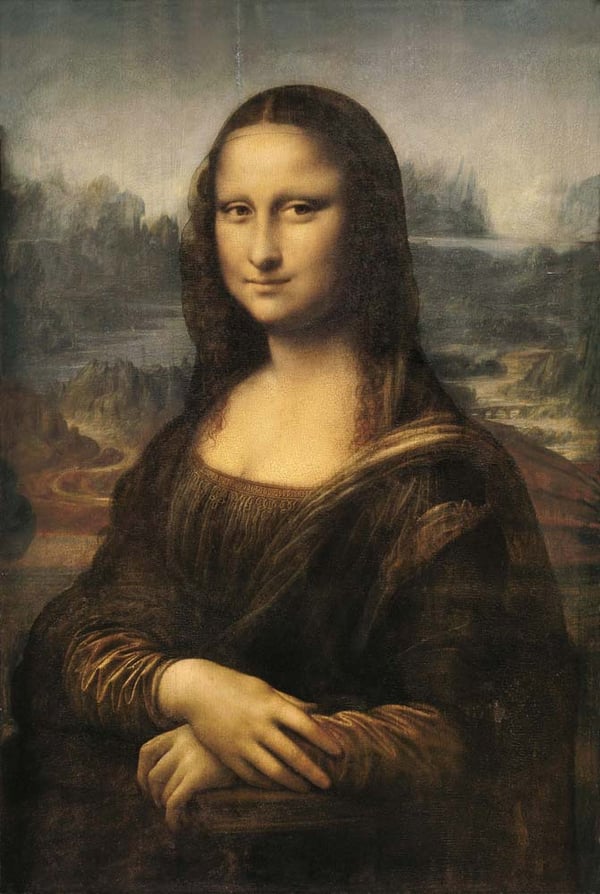
Undoubtedly, one of the Louvre Museum top attractions is the Mona Lisa by Leonardo da Vinci. Her enigmatic smile and the mystery surrounding who she was, why it was painted, and who it was for make this masterpiece one of the most intriguing art puzzles of the last five hundred years (check out our blog Secrets of the Mona Lisa).
What’s clear is that Leonardo devoted nearly 20 years to perfecting this artwork. Many believe that the Mona Lisa embodies all of Leonardo’s artistic skill, technique, and knowledge, making it a true representation of his genius. The artwork’s significance also lies in its connection to Leonardo da Vinci’s sepia art, showcasing his mastery over light and shadow.
Be prepared for a challenge when visiting this iconic work of art. The painting is relatively small, protected by bulletproof glass, and surrounded by a barrier. As one of the Louvre Museum’s most sought-after works, it draws huge crowds, making it tricky to get an up-close view. You’ll find her in the Denon Wing, Level 1, Room 711—a spot you absolutely can’t miss during your visit.
The Wedding Feast at Cana
If the Mona Lisa feels small, Véronèse’s immense work of art The Wedding Feast at Cana will amaze you with its scale. Painted by Paolo Caliari (Véronèse) in 1563, this 6-by-10-meter history painting once decorated the Benedictine Monastery San Giorgio Maggiore in Venice. It depicts the biblical story of Jesus turning water into wine during a wedding at Cana.
This vibrant scene includes over 100 figures enjoying a lively feast. The bride and groom are seated to the left, while Jesus occupies the center, surrounded by apostles. The colorful Venetian attire and intricate details—from embroidered tunics to playful animals—make it mesmerizing. Don’t miss it in the Denon Wing, Level 1, Room 711.
Liberty Leading the People Painting
One of the newer pieces on our must-see list is Liberty Leading the People by French painter Eugene Delacroix, a stirring history painting. It symbolizes the Parisian uprising against Charles X during the French Revolution. Liberty is portrayed as a strong, bare-breasted woman, holding a French flag in one hand and an infantry gun in the other, rallying the people forward.
Delacroix, a passionate supporter of the Republican cause, infused the artwork with patriotic energy. Its classical elements, such as Liberty’s dramatic pose and the light emanating from the war's smoke, make it unforgettable. (Denon Wing, Level 1, Room 700).
Venus De Milo
-
This beautiful sculpture of Aphrodite (Venus) in Greek Parian marble was found on the island of Milos in 1820. The statue is larger than life size at 204 cm (6 ft 8 in) high and despite missing both arms, is in excellent condition. It’s a beautiful example of the Hellenistic period perhaps dating to the 2nd century BC, without the inscription on the plinth we cannot be certain.
-
She has been named Aphrodite or Venus due to her delicate features, her pose, and her draped covering. It was discovered in two pieces, with an inscribed plinth, fragments of the upper left arm, and left hand holding an apple. These attributes would traditionally make her ‘Venus Venetrix’ but the fragments have long disappeared.
-
Today the Venus De Milo is as famous as the Laocoön at the Vatican and the Venus de Medici in the Uffizi, which is thanks to French propaganda of the 19th century. These two works were temporarily at the Louvre thanks to Napoleon’s looting but were returned after his reign, leaving the Louvre and French art culture bereft. The newly acquired Venus filled the gap and a huge PR campaign would raise the statue’s status to one of the Louvre’s Top Ten Masterpieces. (Sully Wing, room 334)
This beautiful sculpture of Aphrodite (Venus) in Greek Parian marble was found on the island of Milos in 1820. The statue is larger than life size at 204 cm (6 ft 8 in) high and despite missing both arms, is in excellent condition. It’s a beautiful example of the Hellenistic period perhaps dating to the 2nd century BC, without the inscription on the plinth we cannot be certain.
She has been named Aphrodite or Venus due to her delicate features, her pose, and her draped covering. It was discovered in two pieces, with an inscribed plinth, fragments of the upper left arm, and left hand holding an apple. These attributes would traditionally make her ‘Venus Venetrix’ but the fragments have long disappeared.
Today the Venus De Milo is as famous as the Laocoön at the Vatican and the Venus de Medici in the Uffizi, which is thanks to French propaganda of the 19th century. These two works were temporarily at the Louvre thanks to Napoleon’s looting but were returned after his reign, leaving the Louvre and French art culture bereft. The newly acquired Venus filled the gap and a huge PR campaign would raise the statue’s status to one of the Louvre’s Top Ten Masterpieces. (Sully Wing, room 334)
Captive Sculptures
-
Two of a series of sculptures by Michelangelo can be found at the Louvre. The Dying Slave and The Rebellious Slave were sculpted in 1513 as part of a monumental tomb designed for Pope Julius II, intended for St Peter’s Basilica in Rome.
-
There are four more of these statues at the Galleria dell’ Accademia in Florence, although they are unfinished. The tomb was never completed and these two pieces were given by Michelangelo to a friend Roberto Strozzi, who eventually fled Florence for France. In turn he gave the slaves to King Francis I.
-
The two figures are of chained, nude, men; the names attributed to the statues denote their demeanour. Dying Slave depicts a young, handsome, man who seems to be sleeping serenely. The Rebellious Slave strains against his chains as if trying to violently break free.
-
With their characteristic twisted torsos and beautifully rendered facial features; both statues show Michelangelo’s precise knowledge of human anatomy and uncanny ability to create such life-like forms out of stone. Michelangelo, however, claimed he simply released his figures from the stone rather than being their creator.
Two of a series of sculptures by Michelangelo can be found at the Louvre. The Dying Slave and The Rebellious Slave were sculpted in 1513 as part of a monumental tomb designed for Pope Julius II, intended for St Peter’s Basilica in Rome.
There are four more of these statues at the Galleria dell’ Accademia in Florence, although they are unfinished. The tomb was never completed and these two pieces were given by Michelangelo to a friend Roberto Strozzi, who eventually fled Florence for France. In turn he gave the slaves to King Francis I.
The two figures are of chained, nude, men; the names attributed to the statues denote their demeanour. Dying Slave depicts a young, handsome, man who seems to be sleeping serenely. The Rebellious Slave strains against his chains as if trying to violently break free.
With their characteristic twisted torsos and beautifully rendered facial features; both statues show Michelangelo’s precise knowledge of human anatomy and uncanny ability to create such life-like forms out of stone. Michelangelo, however, claimed he simply released his figures from the stone rather than being their creator.
Winged Victory of Samothrace
-
This beautiful statue of a winged woman is the Greek goddess Victory or Nike. She is truly breath-taking, perched in her own space on a grand staircase conceived partly with the statue in mind. Exquisitely carved, in flawless, Parian marble, the goddess stands on the prow of a ship, her thin tunic and wings fluttering in the wind. She was no doubt created to celebrate a great naval battle; we just don’t know which one.
-
The statue was discovered on the island of Samothrace at the sanctuary of the great gods, by Charles Champoiseau of the French consulate in Turkey. Found in over 100 pieces, with head and arms missing, she was painstakingly reassembled at the Louvre. Further excavations over 10 years later uncovered darker marble blocks, which formed a piece of a ship.
-
The statue has undergone restoration many times since with lost pieces added (or reconstructed). Trying to establish a date is difficult, the workmanship is Hellenistic with most scholars dating it to the early 2nd century BC. (Daru staircase, Denon wing, Level 1)
This beautiful statue of a winged woman is the Greek goddess Victory or Nike. She is truly breath-taking, perched in her own space on a grand staircase conceived partly with the statue in mind. Exquisitely carved, in flawless, Parian marble, the goddess stands on the prow of a ship, her thin tunic and wings fluttering in the wind. She was no doubt created to celebrate a great naval battle; we just don’t know which one.
The statue was discovered on the island of Samothrace at the sanctuary of the great gods, by Charles Champoiseau of the French consulate in Turkey. Found in over 100 pieces, with head and arms missing, she was painstakingly reassembled at the Louvre. Further excavations over 10 years later uncovered darker marble blocks, which formed a piece of a ship.
The statue has undergone restoration many times since with lost pieces added (or reconstructed). Trying to establish a date is difficult, the workmanship is Hellenistic with most scholars dating it to the early 2nd century BC. (Daru staircase, Denon wing, Level 1)
Cupid and Psyche Antonio Canova
-
‘Psyche Revived by the Kiss of Love’ is one of the many mythological pieces by the Italian sculptor Antonio Canova. The beautifully tender couple are cupid and psyche, the story is from Ovid’s metamorphoses. Canova has captured the moment cupid wakes his love from a potion-induced sleep with a tender kiss.
-
Typical of Neoclassical sculpture it is full of emotion and romantic sentiment in the way Psyche wakes up an embraces Cupid from below.
-
The workmanship is so precise – the feathers on Cupid’s wings, Psyche’s belly button and slender toes. It is these fine details that render the statue lifelike. The anatomical detail of their bodies in movement is spectacular; Cupid’s leg as he bends down, Psyche’s twisted position showing the grace of her neck, the curve of her hips. We may be forgiven for thinking this is flesh, not marble! (Denon Wing, Room 403)
‘Psyche Revived by the Kiss of Love’ is one of the many mythological pieces by the Italian sculptor Antonio Canova. The beautifully tender couple are cupid and psyche, the story is from Ovid’s metamorphoses. Canova has captured the moment cupid wakes his love from a potion-induced sleep with a tender kiss.
Typical of Neoclassical sculpture it is full of emotion and romantic sentiment in the way Psyche wakes up an embraces Cupid from below.
The workmanship is so precise – the feathers on Cupid’s wings, Psyche’s belly button and slender toes. It is these fine details that render the statue lifelike. The anatomical detail of their bodies in movement is spectacular; Cupid’s leg as he bends down, Psyche’s twisted position showing the grace of her neck, the curve of her hips. We may be forgiven for thinking this is flesh, not marble! (Denon Wing, Room 403)