What to eat in Paris
What to eat in Paris
Part of the allure of Paris is those grand avenues and the neoclassical architecture, not to mention the boutique shopping. There are museums and galleries galore, but between all of this, you will have to eat. France has an exceptional reputation for its food and wine, as well as a café culture that expects you to take a moment to relax. Watch the world go by and nibble on something mind-bogglingly good.
Want to explore more of Paris' local flavors of French cuisine? Why not go on a food tour in Paris? These tours will take you to the best places to eat in Paris, from local bistros to Michelin-starred restaurants, ensuring you experience a wide range of French classics. Whether you're looking to explore restaurants in Paris or just enjoy some classic French dishes, a food tour will guide you through the city's best French restaurants & eateries.
What should you eat in Paris? Here is a list of typical French food you simply must have to eat like a local in Paris. The only problem you might have is deciding what to have first!
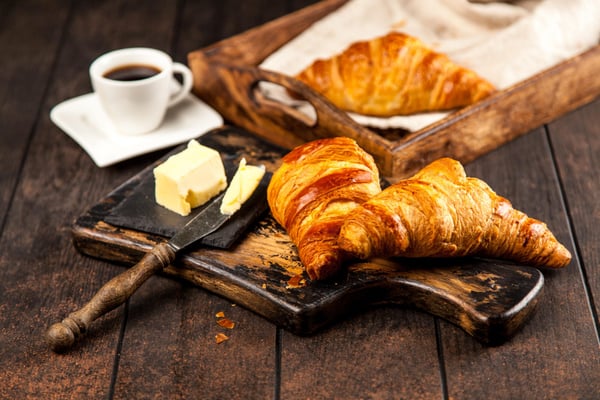
Croissant
-
The typical French breakfast is coffee and a pastry – a freshly baked croissant. What better way to start the day than with a sublime, soft, and slightly sweet, pastry filled with air and butter? If you want to be really French you could dunk it into your coffee!
-
Although there are claims that the croissant was invented in Austria (Vienna), this divine crescent-shaped, flaky pastry has long been associated with France. Find a nice street café and wake up with the city in true Parisian style.
-
Best place to try it? Buy one straight out of the oven from your local boulangerie or try La Maison d’Isabelle, recently voted best croissant in Paris!
Croque Monsieur
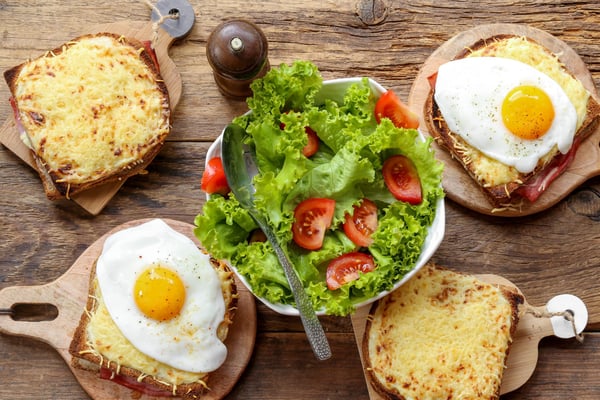
If you like something savory to start the day why not begin with another famous snack the Croque Monsieur or the Croque Madame; a cheese and ham grilled sandwich with a difference? This typical Parisian snack was invented in 1910 and has been a local favorite ever since. Made with ham, Gruyere cheese and lashings of bechamel inside and outside and grilled until crunchy (Croquer means to crunch or bite).
Croque Madame is served with a fried egg to top it all off. Crunchy on the outside and deliciously cheesy and gooey on the inside, although it is a sandwich, it is usually eaten with a knife and fork.
Jambon-beurre
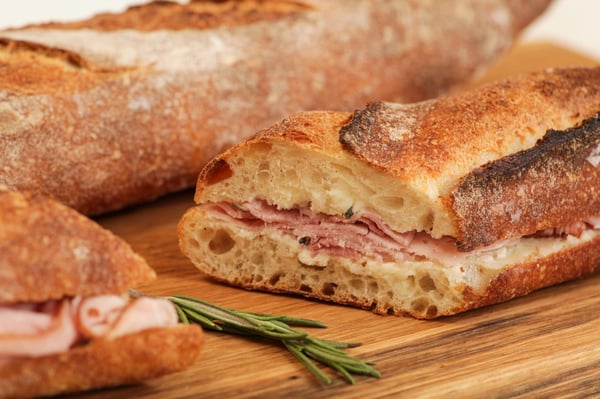
Another typical Parisian sandwich is the Jambon-beurre which you will find in any café. A typical Paris Street food that is as simple as you can get: Half a fresh crispy baguette with butter and the finest French ham. Sounds like a ham sandwich so what makes it so great? The quality of the three ingredients! Whether you are looking for super traditional or cheap eats this is the most typical you can get!
Best place to try it? La Fontaine de Belleville
Escargots
Eating snails for the first time is an experience, they are served on their own little platter with a slightly tricky contraption to hold the shell and pull out the meat. As they don’t have a lot of taste, snails take on the flavour of what they are cooked in, and in France the favourite way to serve them is in garlic and parsley butter, simply divine.
You may imagine they are fine dining dish, but you will find them in simple bistros as well as restaurants famous for gastronomic excellence. If you have never tried snails, Paris is the place to do it, not only will you be trying a new dish but you will learn to master an entirely new set of cutlery!
Best place to try it? L’Escargot (you can’t miss the restaurant for the huge golden snail!)
Steak Frites
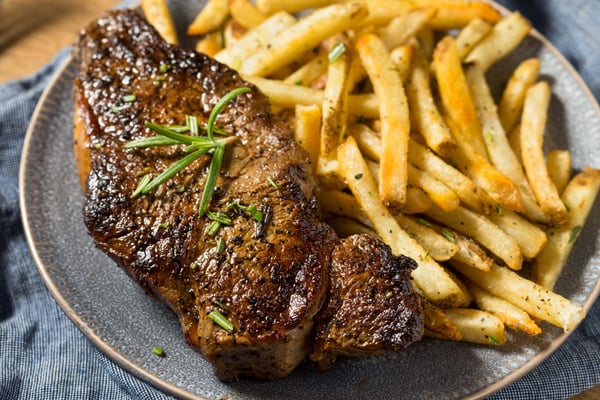
Steak Frites otherwise translated as ‘Steak and Chips’ is a local favourite; a rib steak with long skinny fries (here you will learn why we call them ‘French Fries’) topped with garlic herb butter and served with a side salad. Steak Frites is a must-eat when in Paris and is available everywhere, as a Parisian staple meal you will find it in all the bistros.
Best place to eat it: Au Bœuf Couronné in La Villette (arr 19) where the dish originated or Le Relais de l’Entrecôte a chain that only serves Steak Frites!
Take Note: – The French love their meat and they like it to have flavor, which means they like it bloodier than in other places. You will need to tell your waiter ‘la cuisson’ – how you want it cooked from Bleu – sealed on the outside, Saignant – means bloody, À point – this is rare by British or American standards and finally, Très bien cuit is about as cooked as you can get it which is medium rare by other standards.
Steak Tartare
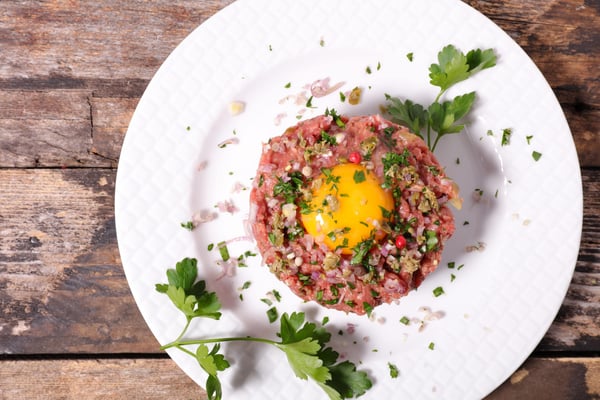
Another meaty favorite in Paris is Steak Tartare, although you don’t have to worry about the cooking as it is served raw. Perhaps one for the foodies or gastronomically adventurous, this is an absolute must-try. Only the finest steak is used, minced finely, with onions and herbs; it is served as a patty with capers and peppercorns, often with an egg yolk on top (traditionally quail). This hugely popular dish, bizarrely is NOT French, but Mongolian, brought to France by Russian sailors in the 17th century.
French Onion Soup
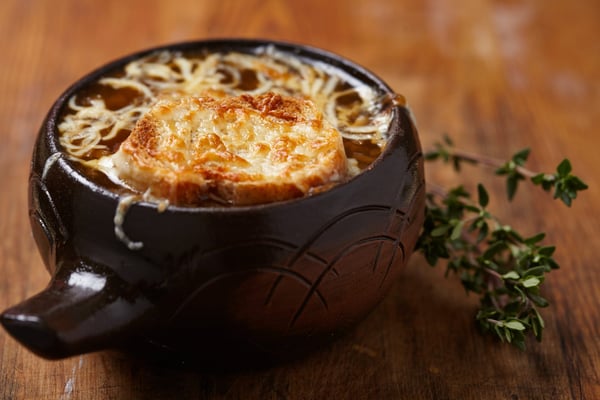
Soupe à l’Oignon known to us as French Onion Soup is a traditional hearty soup made from caramelised onions and beef broth served with a crouton of bread with cheese toasted on top. This simple yet delicious soup was traditionally served in markets to keep the traders and workers invigorated. Despite its simplicity and rustic origin, it is a local favourite and still widely available in the brasseries of Paris.
Best places to eat it: Bistrot des Vosges
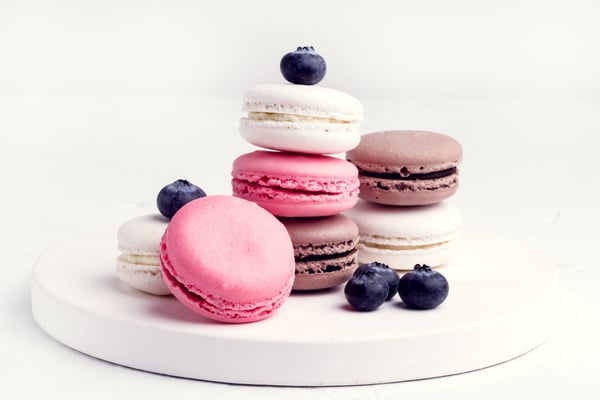
Macarons
Perhaps the most famous sweet treats in Paris are macarons, crispy delicate discs like méringue made of Almond flour, filled with a rich creamy filling. Not to be confused with the coconut Macaroon, these divine little bites look a little like a biscuit sandwich but much lighter, crispy and divinely moreish. The history of these moreish little treats is a hotly debated topic with experts claiming they come from as far as Arabia or as close as Italy under Catharine de Medici.
The French food dictionary Larousse claims they are French-born; created during the French Revolution by two Carmelite nuns. Traditionally with chocolate or raspberry cream inside, today, artisans have created an abundance of flavours as well colours. Today macaron come in myriad sweet and savoury flavours from jam-filled ones to fois gras!
Where to stay in Paris?
Deciding where to stay in Paris will depend on your budget and interests. The city is enormous, and the major attractions are spread out. First, you need to get your bearings; the River Seine divides the city. To the south is known as the Left Bank or Rive Gauche, famous for classic architecture – the Paris of 19th-century artists and writers. North of the river, the Right Bank is hipper and trendier.
Paris is divided into 20 districts called arrondissements, arranged in a sort of spiral emanating from the centre of the city, with the first arrondissement at the heart. As a visitor to Paris, the main arrondissements of interest (central Paris) are arrondissements 1, 2, 5, and 6, where you will find the Louvre, Opera Garnier, the Latin Quarter, and the Champs-Élysées.
If you're looking for a friendly hotel in Paris, France, you’ll find a range of options across these areas. Paris may be huge, but it has an excellent transport network. The best advice we can give is to choose lodging in Paris near a metro station. This will help you get around easily and explore all that the city has to offer.
Many hotels are within walking distance of top attractions, making it easy to enjoy your trip to Paris without long commutes. For a more central stay, consider a hotel that’s just a short walk from famous landmarks, allowing you to experience the heart of Paris.
Like all capital cities, accommodation in the centre of the city tends to be more expensive. If you want to surround yourself with the glamour of the Champs-Élysées and Cartier, you will pay a premium. But don't worry! There are other charming parts of the city with plenty of class and atmosphere that don’t have to break the bank.
We highly recommend exploring options a bit further out, where you can still enjoy the beauty of Paris with a more budget-friendly price tag.
1st Arrondissement – The Louvre
Many of Paris’s most famous landmarks like the Louvre Museum are in the first arrondissement or close by. Notre Dame, the Latin Quarter, the Centre Pompidou, and to the west, the Champs-Élysées, are only a 5 minutes’ walk. The Tuileries Gardens are a wonderful place for a stroll or enjoy a glass of wine at one of the quaint cafes lining the garden of the Palais Royale. If shopping is your thing, the main department stores are also only a 10 minutes walk north of the Louvre. Just across the river are the Musée D’Orsay and Saint Germain.
The first arrondissement is seriously sophisticated, and you can’t get more central. This is the most sought-after location, which is reflected in the prices. There are friendly hotels here, but you will be paying 4-star prices for the location.
The first arrondissement is also well-connected, with the nearby Chatelet Les Halles complex acting as a transport hub with links to five metro lines, both Charles de Gaulle and Orly airports, as well as direct trains to Disneyland. You can also walk across the river from the Louvre to St Michel RER station, where there are frequent trains to Versailles.
Best for: Those who want to be in the heart of Paris and the centre of everything.
Champs-Elysees & Grands Boulevards (arrondissement 8 & 9)
The Champs-Élysées is perhaps the most exclusive area of Paris. This famous wide avenue lined with horse-chestnut trees is known for its glamour and boasts luxury boutiques like Cartier and Tiffany, classy street cafés including Pierre Hermé and Ladurée if you want to try the famous Macarons (see what to eat in Paris).
The nearby Grands Boulevards area is just to the northeast of the centre of Paris, but still easily walkable distance to the Opera Garnier, Louvre, etc. It is a bustling, lively area with lots of small restaurants, boutique shops, and markets along the main thoroughfares.
Known for the Arc de Triomphe and Grand Palais, this is a great place to explore on foot or by bicycle. The Marché Président Wilson is a must-visit – a market with fresh flowers and organic produce. For art fans, the Musée Galliera, Palais de Tokyo, and Petit Palais are close, and for park lovers, the compact Parc Monceau filled with statues and neoclassical architecture is to the north in the 8th arrondissement.
From here, you can stroll the banks of the Seine or enjoy it by boat with Bateaux-Mouche. Step away from the main roads, and there is a village-like feel with old-fashioned shopping galleries now filled with collectors’ shops and small second-hand bookstores.
Hotel prices here are ‘value for money’ and are a big step down from the options just a short distance away around the Louvre and Opera Garnier. This area is full of centrally located mid-range and budget hotels, including global chains like Ibis and Best Western.
Best for those who want the shopping of Paris.
Montmartre
To the north of the city, you will find a village feel among the hilly streets of Montmartre with ivy-clad buildings and an air of enchantment. This is where Amelie was filmed and is perhaps for many the ‘true’ Paris. Retro cafés and multicoloured houses surround the dazzling white Sacré-Cœur perched high on the hill. There are breathtaking views of the city from here.
Montmartre is a great place to explore with interesting shops and a plethora of eateries. The Sacré-Cœur and the Musée de Montmartre with its beautiful rose gardens are a must. The Cimetière Montmartre is the final resting place of a number of historical figures, including Stendhal, Émile Zola, Degas, and many more. You can also visit Paris’ only vineyard, ‘Clos de Montmartre.’ Further down the hill is an up-and-coming area known as South Pigalle. Alongside raunchy cabarets and peepshows, you will find trendy new wine bars and restaurants.
Hotels here range from former mansions and villas of the Belle Époque to quirky boutique hotels, many offering views of the city.
Best for: Couples looking for a romantic hideaway or hipsters looking to check out the edgier parts of town. Hotels range from former mansions and villas of the Belle Epoque to quirky boutique hotels.
The Latin Quarter
The Latin Quarter in the 5th arrondissement is often traversed by tourists who come to chill out in the nearby Jardin du Luxembourg or to visit some of the finest museums in the city: The Panthéon, Musée National de la Moyen, the Natural History Museum, and the Institut du Monde Arabe.
Home to Paris’ university, the Sorbonne, the area is buzzing with plenty of packed pubs, bars, and clubs, as well as diverse restaurants to suit all budgets. For those who want typical Paris charm minus the students, just walk a little away from the student bars, and you will find cobblestone streets and leafy squares. Some of the most diverse architecture in the city is here, and there are even Roman ruins!
Don’t miss a stroll down the oldest street in Paris, Rue Mouffetard, which has a permanent open-air market at Saint-Médard Square. From here, the street is lined with numerous stands, small independent shops, and cafes.
You will find friendly hotels and urban chic at an affordable price in the Latin Quarter.
Best for: Those who want Parisian charm in a quiet area.
Le Marais
The Marais spreads across the 3rd and 4th arrondissements on the right bank of the Seine across from Notre Dame. Perhaps one of the more traditional areas of Paris, it is known for its beautifully kept squares, aristocratic mansions, and grand hotels alongside traditional restaurants and boulangeries. Still fairly central, to the west is the Louvre, the Tuileries, and the monumental Hôtel de Ville (city hall).
This area hosts a number of independent art galleries, the Musée Picasso, and the magnificent Place des Vosges, where you can visit Victor Hugo’s house. The Musée des Arts et Métiers is fantastic for kids who can don hard hats and build things, and the Centre Pompidou is close by.
Perhaps the trendiest neighborhood, attracting the uber-cool and somewhat younger crowd. But it is also the most diverse, as the Marais is home to Paris’ large LGBTQ+ community, as well as the Jewish quarter. Boutique shopping for unique fashion and art pieces in Haut-Marais is second to none.
Marais has a selection of hotels ranging from grand hotels from the Belle Époque to decadent retro, many of which are centrally located.
Best for: Those who want to discover old Paris, shop at chic boutiques, and families with slightly older kids.
7th Arrondissement – Eiffel Tower
The 7th is the perfect place to stay for first-time visitors to Paris, whether you’re looking for a romantic getaway or a family vacation. Here you will find the Eiffel Tower alongside breathtaking architecture, world-class restaurants, high-end shopping, and on Rue Cler, a charming village feel. As it is close to the river, you can take a romantic stroll along the Seine or visit the family-friendly Berges de Seines with a riverfront play area.
There are great museums here too. Musée D’Orsay is second only to the Louvre with its impressionist collection, the Musée Rodin, and the Military Museum at Les Invalides. You can even take a guided tour of Paris’ sewer at Les Égouts – the Museum of Paris Sewers!
You will find a great range of hotels with affordable prices, many even offering a view of the Eiffel Tower!
Best for: First-timers to Paris and families.